Call us now :07315122038
 Send Inquiry
 Send Inquiry
Conveyor Belts For Sea Ports
Conveyor Belts For Sea Ports Specification
- Power Source
- Electric motor
- Thickness
- 8 mm 24 mm
- Surface Finish
- Smooth/Patterned/Anti-skid
- Features
- Weatherproof, anti-static, high load bearing, UV-resistant
- Belt Type
- Chevron/Plain/Custom Profile
- Material
- High tensile strength rubber with EP/NN fabric
- Type
- Polyester/Nylon (EP) Fabric Conveyor Belt
- Structure
- Belt and supporting rollers on robust steel frame
- Belt Conveyor
- Yes
- Roller Conveyor
- Optional roller support
- Vertical Conveyor
- Available as customized option
- Resistant Feature
- Highly resistant to seawater, impact, abrasion and corrosion
- Load Capacity
- Up to 2000 tons/hour
- Voltage
- 380V / 415V (customized)
- Power
- 5 HP 50 HP as per system
- Speed
- 0.5 3 m/s (adjustable)
- Usage & Applications
- Bulk cargo handling, ship loading/unloading, sea port material transfer
- Fire Resistance
- Available on demand
- Tensile Strength
- Up to 2000 N/mm
- Belt Edge
- Cut edge or moulded edge as required
- Belt Width
- 400mm 2200mm
- Maintenance
- Low maintenance
- Noise Level
- Low noise operation
- Minimum Pulley Diameter
- 200 mm 600 mm
- Customization
- Length, width, layer, and cover grade can be tailored per project#
- Operating Temperature Range
- -20C to +80C
About Conveyor Belts For Sea Ports
The main objective of using this Ports Conveyor Belt is to handle or move heavy or light goods move seamlessly from shops to the ports or vice versa. Money saving loading and unloading of cargo increase its demand in the industrial sector. There's no need for manual handling, loading and unloading of goods or corrugated boxes because it makes every process automatic and efficient. It is manufactured by experienced engineers with the implication of advanced technologies. You can purchase this belt from us in standard carcass thicknesses, lengths, loading capacities and widths. Our Ports Conveyor Belt is capable of working consistently in almost every situation because of its sturdiness and impact proof structure.
Engineered for Coastal Toughness
These conveyor belts are specifically built to withstand the harsh sea port environment. The reinforced EP/NN fabric and high-tensile rubber deliver exceptional resistance to abrasion, corrosion, impact, UV, and seawater exposure. Whether transferring heavy bulk materials or operating under intense weather, their robust construction guarantees reliable and consistent performance.
Flexible Customization to Meet Every Project
Every port project has unique demands. Our conveyor belts are available in an extensive range of widths, thicknesses, and cover grades. Choose between cut or moulded edges, smooth or patterned finishes, fire resistance, and chevron or plain profiles. We work closely with clients to ensure each belt is perfectly suited for their operational needs.
Efficient, Low-Maintenance Operations
Our belts offer low-noise operation and require minimal maintenance, enhancing operational efficiency. Adjustable speeds (0.53 m/s) and electric motor power (550 HP) provide optimal control. The sturdy steel frame and optional roller supports guarantee longevity, reducing downtime and maximizing productivity for busy sea port applications.
FAQs of Conveyor Belts For Sea Ports:
Q: How are these conveyor belts tailored for sea port environments?
A: The belts are constructed with high tensile EP/NN fabric and rubber, designed to resist seawater, abrasion, corrosion, impact, and UV exposure, ensuring longevity and dependability in coastal and marine conditions.Q: What customization options are available for these conveyor belts?
A: We offer customization in belt length, width (400mm2200mm), layer count, cover grade, edge type, profiles (chevron/plain/custom), surface finish, voltage, and fire resistance; vertical conveyor designs are also available upon request.Q: When should fire resistance and anti-static features be considered?
A: Fire resistance and anti-static features are recommended in applications where flammable materials are handled or when enhanced safety protocols are required. These features are available on demand to match specific operational guidelines.Q: Where can these conveyor belts be used within sea ports?
A: They are ideal for bulk cargo handling, ship loading/unloading, and transferring materials between storage and vessels, making them suitable for nearly every material flow point in maritime logistics zones.Q: What is the installation process for these conveyor belts?
A: Installation involves coordinating the tailored belt build with the robust steel frame, including fitting electric motors and any optional roller supports. Our team provides technical support to ensure seamless setup and operation within your port facility.Q: How does the low maintenance feature benefit operators?
A: Minimal maintenance requirements reduce operational downtime and maintenance costs, allowing for more consistent throughput and greater productivity in high-volume port environments.Q: What advantage does adjustable speed offer in sea port operations?
A: Adjustable speed (0.53 m/s) permits fine control over material handling rates, enhancing efficiency across different types of cargo and varying operational demands in busy port settings.
Tell us about your requirement

Price:
Quantity
Select Unit
- 50
- 100
- 200
- 250
- 500
- 1000+
Additional detail
Mobile number
Email

More Products in Industrial Conveyor Belt Category

Conveyor Belt for Hydro Power Generation
Load Capacity : Customizable as per requirement
Belt Type : Endless, Cleated or Flat
Resistant Feature : Other, Heat, Water, and Wear Resistant
Material : HighGrade Rubber with Nylon/Steel Reinforcement
Type : Belt Conveyor
Surface Finish : Anticorrosive Coating
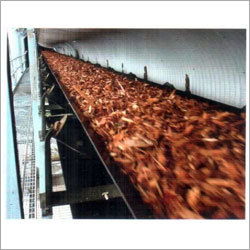
Conveyor Belt for Timber & wood industry
Load Capacity : 2002000 kg/hr (customizable as per requirement)
Belt Type : Closed or open belt, smooth or rough surface
Resistant Feature : Other, Abrasionresistant, moistureresistant, fireretardant options
Material : High tensile rubber, steel, PU, PVC
Type : Belt Conveyor
Surface Finish : Smooth or textured for optimal grip and wear
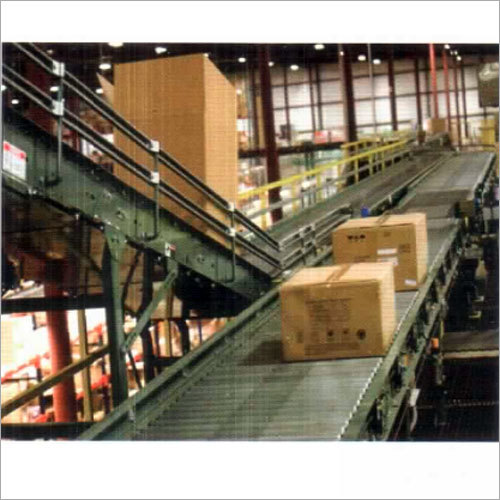
Conveyor Belt for packaging application
Load Capacity : Up to 100 Kg/Feet
Belt Type : Endless, Antistatic, Smooth Surface
Resistant Feature : Other, Heat & Wear Resistant
Material : PVC / Rubber / PU Belt, Mild Steel Frame
Type : Other, Flat Belt Conveyor
Surface Finish : Powder Coated
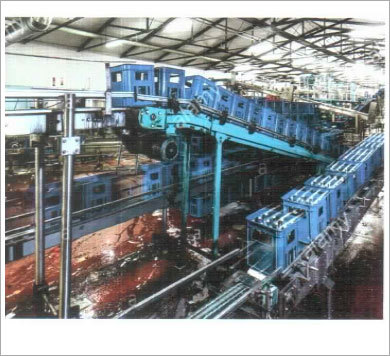
Conveyor Belt for bottling industry
Load Capacity : Up to 200 kg per meter (customizable as per application)
Belt Type : Flat & modular types available
Resistant Feature : Other, Corrosion & chemical resistant
Material : Stainless Steel (Frame), PVC/PU/Plastic (Belt)
Type : Belt Conveyor
Surface Finish : Polished/Stainless Steel finish

 Send Inquiry
4641/A, Inside , Ajmeri Gate,Delhi - 110006, India

Mr. Sachin Thukral
(Proprietor)
Mobile :07315122038
 Send Inquiry
 Send SMS
Developed and Managed by Infocom Network Private Limited.
